Long Distance Move From Arlington: How to Plan It
October 2, 2026
If you are leaving Arlington, McLean or another Northern Virginia community for another state, start with four tasks: confirm the mover is authorized for interstate household goods moves, get an estimate whose limits you understand, decide on your level of protection, and reserve curb space for the truck.
What does a long distance move from Northern Virginia involve?
Once your belongings cross a state line, the move falls under federal rules. An interstate mover needs a USDOT number, FMCSA registration and household goods authority. FMCSA is the federal agency that oversees interstate movers.
A move that stays inside Virginia is handled differently. The Virginia DMV regulates household goods carriers for moves within the state, and moves under 31 road miles are exempt from parts of those rules.
How do you check a long distance mover before booking?
- Ask the company for its USDOT number.
- Look it up in FMCSA’s Protect Your Move database. It shows whether the company is registered, insured, authorized for household goods, and whether complaints have been filed.
- Read the authority line carefully. A company can be registered and still lack household goods authority, which means it may not legally move your furniture across state lines.
- Ask for the certificate of insurance. The name and address on it should match the FMCSA record.
Binding or non-binding: which estimate should you ask for?
With a binding estimate, you owe no more than the estimated amount at delivery. With a non-binding estimate, the mover may demand at most 110 percent of the estimate at delivery, and may not charge you for giving the estimate.
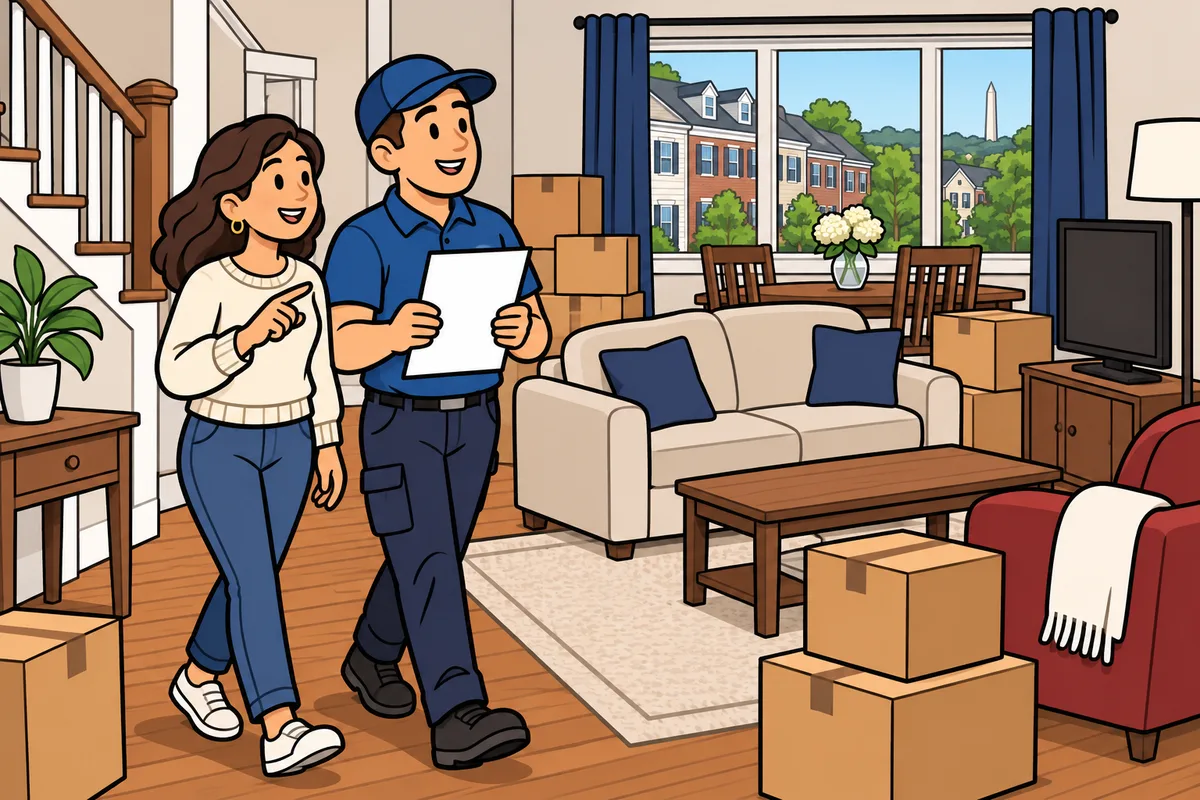
The catch is scope. If you add items or services after the estimate, such as a forgotten room or an extra stop, a new estimate is needed. Walk the whole home with the estimator so nothing is left out.
If you want a fixed number, ask for a binding estimate. If you accept a non-binding one, budget for the full 110 percent at delivery so the payment does not catch you short.
How much protection do your belongings get?
By default, an interstate mover is liable for the full replacement value of your goods. You lose that only if you waive it in writing. The cheaper alternative, released value, pays 60 cents per pound per article.
Two checks before moving day:
- List every item worth more than 100 dollars per pound and declare it to the mover in writing.
- Read the coverage section of your paperwork and confirm it matches what you chose. Do not sign a waiver you did not mean to sign.
What should you do about the truck at your Arlington curb?
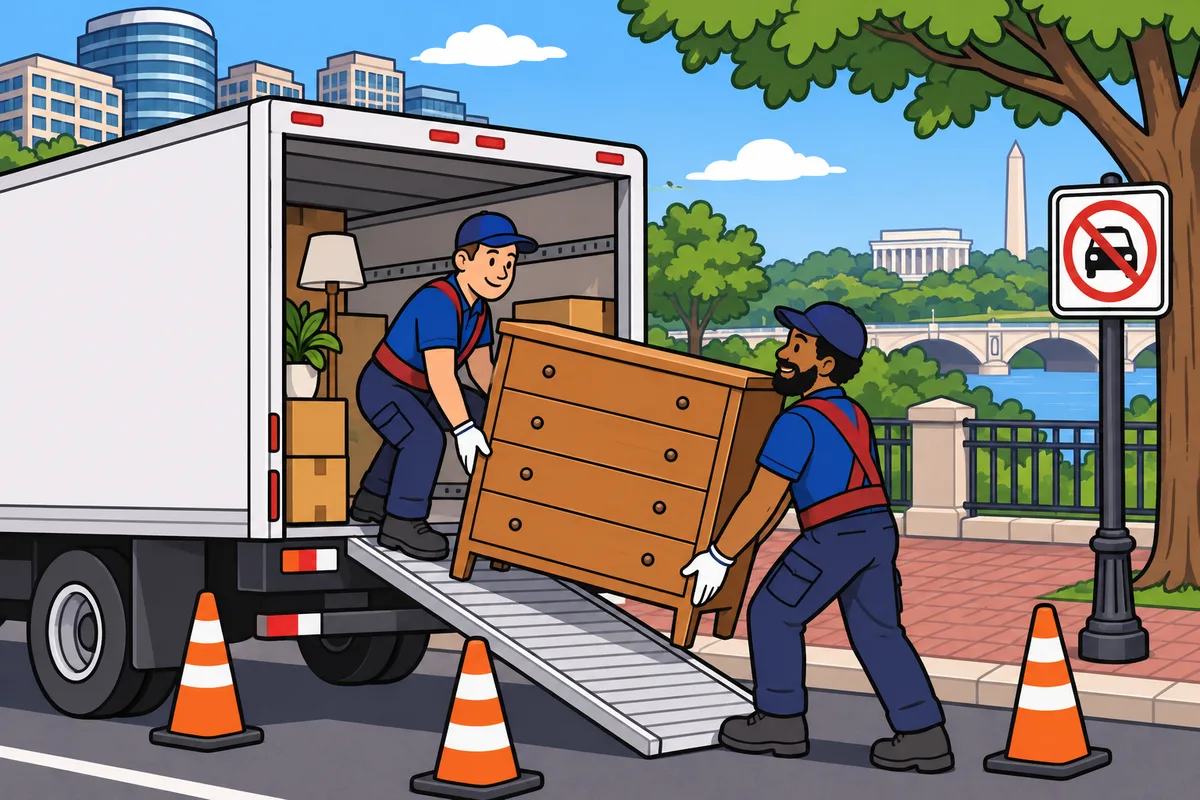
In Arlington County, a moving truck parked on the street needs a moving van permit. Apply online at least 5 business days ahead, or 7 if a county holiday closure falls in that window. One permit covers at most two consecutive days.
Placement rules matter on the day:
- Park against the curb
- Stay 20 feet from the corner
- Keep clear of fire hydrants and driveways
If you live in an apartment or condo, book the loading dock and the elevator with building management at the same time as the permit. Outside Arlington County, ask your HOA or property manager what they require.
What is a sensible timeline?
- Six to eight weeks out: get two or three in-home or video estimates and run the FMCSA check on each company.
- Five to six weeks out: choose the mover, decide between binding and non-binding, and pick your protection level.
- Four weeks out: list high-value items, start packing rooms you rarely use, and book elevator time at both homes.
- Two weeks out: submit the Arlington van permit, well ahead of the 5-business-day minimum.
- One week out: confirm the inventory, the delivery address and the payment method.
- Moving day: check the inventory sheet before the truck leaves, and keep the estimate and paperwork with you, not on the truck.
- Delivery day: note any damage on the paperwork before the crew leaves.
At Affordable Movers USA, long distance moves are priced as one figure agreed before moving day. That figure combines a loading and unloading fee for your home size with $2.25 for each mile of the route, and the minimum job is $1,450. No deposit is taken up front, your things travel on our own truck with the same crew, and you get a delivery date at loading. To get a price for your route, call (703) 761-1175, Monday to Friday 9 a.m. to 5 p.m. or Saturday 9 a.m. to 1 p.m..
Quick answers
How long does delivery take after loading?
With our trucks, routes up to 350 miles take 1 to 2 days and routes up to 800 miles take 2 to 3 days. We call the day before delivery with an arrival time.
Can I pack myself and still have the crew load?
Yes. Materials are sold by the box if you pack on your own, and the price still covers loading and unloading.
Where do I report a problem with an interstate mover?
Use protectyourmove.gov or call 1-888-368-7238.